The Delian Mode: anti-imperial leagues, synths, federated computing, and lost futures
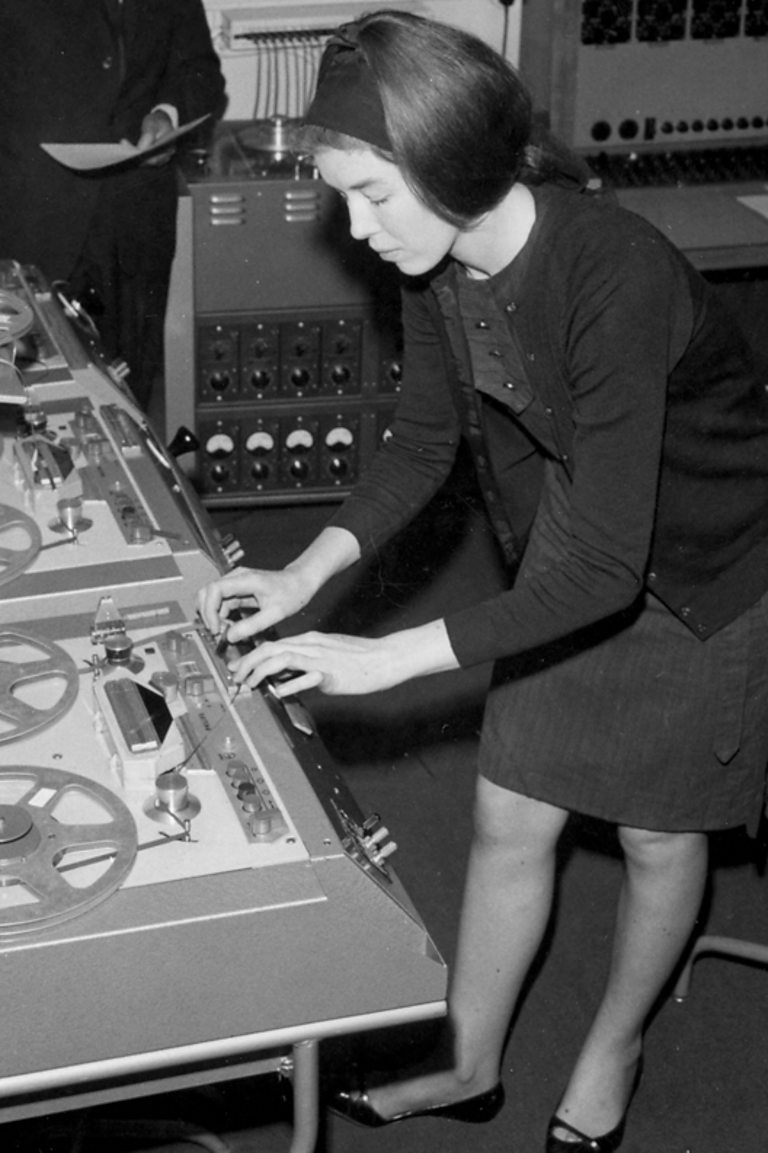
Photo credit: BBC Archives
Content notice — mentions of: The Blitz. The War on Terror. The Khmer Rouge. Realpolitik. Depression. The COVID-19 pandemic. Not the views of any employers, obvs. Not a historian or constitutional scholar, obviously.
Long was the year, will you stay now you’re here?
The Lycian League lasted for hundreds of years (constituted ca. 2nd century BCE – 43 CE) as an ancient democratic alliance of prosperous and culturally rich city-states along the Southern Anatolian coast. Lycian civilisation itself dates from the Bronze Age. Yet they’re barely known in modern times outside niche archaeological circles. Perhaps because they didn’t expand, they didn’t conquer, they didn’t have a Great Empire or a Great Leader. Rich civic life is often not enough for the historical record — the conventional narrative of history becomes condensed to battles and states begat in blood.
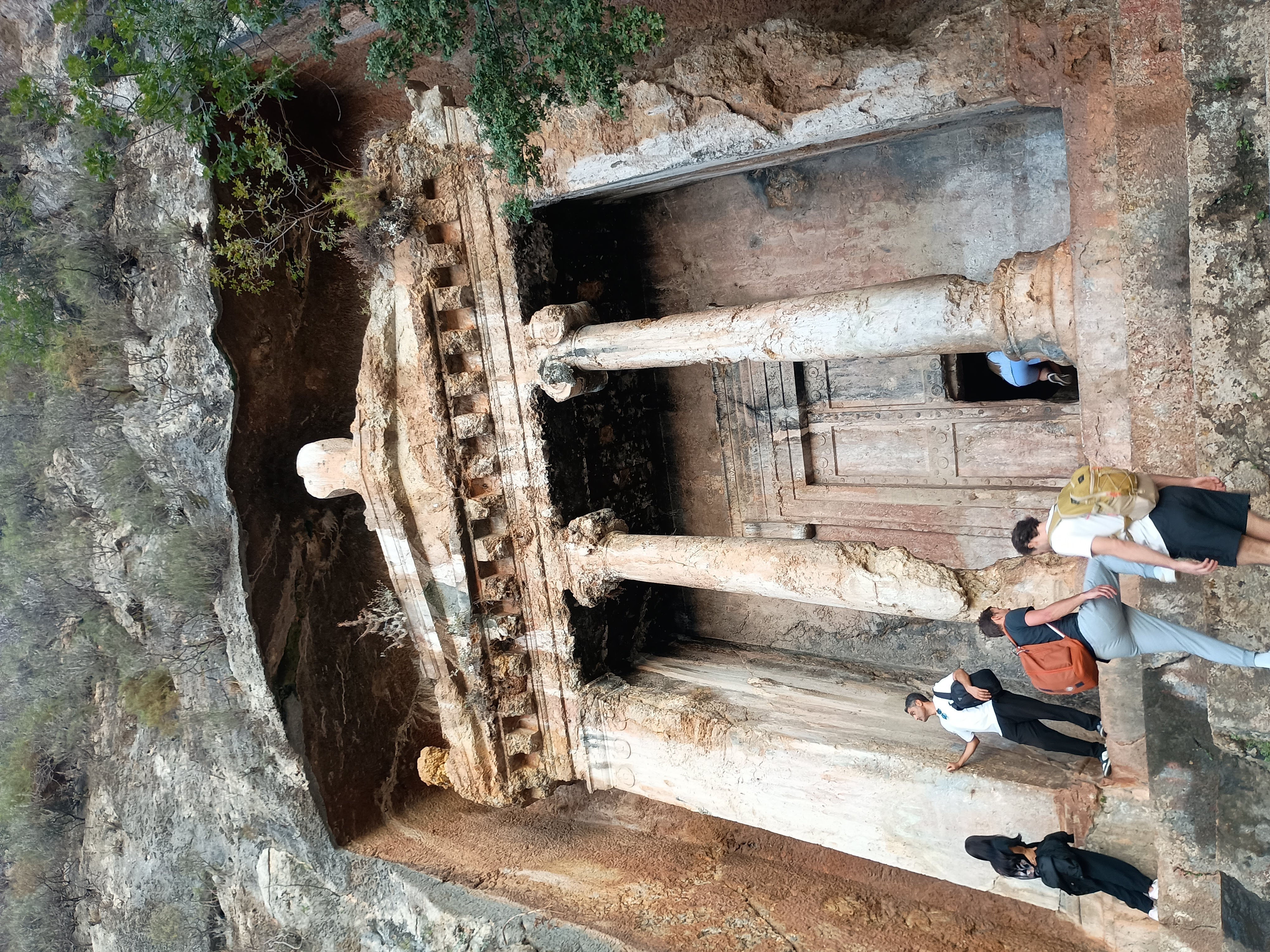
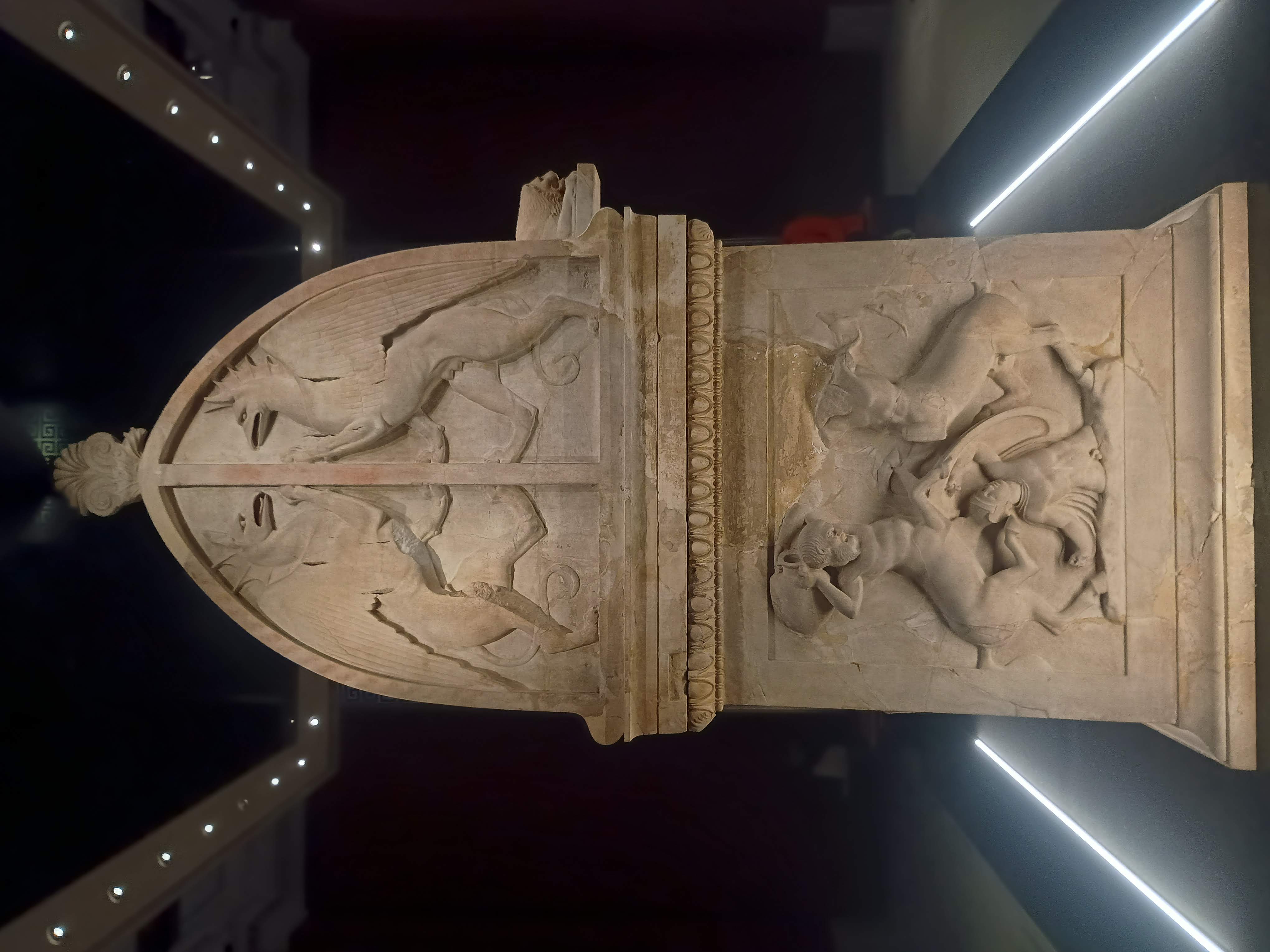
The Lycians left behind some monumental tombs hewn into the cliffs of Türkiye and stunning griffin-fringed sarcophagi. They also left behind an early democratic model, effectively repelled powerful imperial neighbours, and retained some autonomy even after annexation as the final Roman province in Anatolia in 43 CE. Assimilated under Pax Romana, their courts and federated structure were allowed to stand. Yet, the Lycian legacy dissipated except among a few scholars.
Forgotten Federations
The Delian League was an anti-Persian Empire defensive alliance, after repelling the largest invasion force the Aegean had ever seen. It united the smaller Greek city-states —150–200+ at its peak— against the dominance of the continental threats. Its symbolic core was in Delos, where the Treasury was kept. The members of the alliance paid into the phoros tribute sTalking with the ghosts of our civic memory has become the ‘killer app’ of our era.ystems that provided funds, ships, manpower for the league. The island of Delos had practical advantages: it was central to the Aegean and far-flung from any dominant city-states. It also held symbolic power: it was neutral territory controlled by no-one, and was long sacred as the birthplace of Apollo and Artemis and so hopefully inviolable.
This alliance divvied among equals, where the phoros was paid according to the population, means, and resources of each island city-state lasted in true form for less than 25 years, shattered by a hollowing out of the alliance structure. In 454 BCE the accumulated treasury was relocated from Delos straight to Athens — under the justification of security, while also in reality accomplishing fiscal control. Voluntary contributions into the league were now mandatory, the treasury re-appropriated for the glorification of Athens, and Athens began to dictate the politics of other city-states. States which tried to leave were kept in the league by military force, the phoros increased, and the tribute paid to Athens from client city-states was totted up in stone in the Acropolis for all to see [with 1/60th dedicated to Athena]. In this way all tributaries flowed back to the Athenian well. The Athenian hegemony began to impose democratic government structures across the region. The centre that brought together the League grew too powerful. Sparta, often steadfast and unafraid to be bellicose, grew weary of growing imperial ambitions from Athens, and in the Peloponnesian War that followed Sparta reversed the power structure using the support of the Persian Empire to crush Athens, waging shameless total war, and bringing an end to the Ancient Greek Golden Era as the Aegean states became Spartan subjects.
Athena is known as the goddess of wisdom and strategic warfare, symbolised by the wise owl. Moreover, as Athena Polias (‘Athena of the City’) she was protector of the polis — civic life, the city-state, democratic institutions. This model was seen by Athenians to be superior and they used the wealth of their splendid Athens (bolstered by phoros revenue) and naval domination to export this governance model to the periphery. Athens, under the aegis of the goddess of the civic state, could not resist overriding the isolated autonomy of the league it drew together. The impulse to federate, to balance local autonomy with central authority, echoes down the centuries, even if the voices of the polis are silent in our history. A resonance resurfaces during experiments in democracy of the early United States.
Federalism Returns
The American revolution was against paying tribute without representation. A revolt against a naval empire that could no longer effectively reach them. As a set of colonial outposts they had choices to make on how to unite. All States [except RI, the smallest] sent delegates to the 1787 Federal (AKA Constitutional) Convention to address what the scope of federal powers should be: what were inalienable states rights, who got representation and how, and who was considered a citizen or property.
What emerged was the compromise: a core Constitution settling divisive views, which needed to be ratified by the States. The Federalist Papers were circulated to sell the document to the new nation. Three papers mention the Lycians. No. 9 argues that political science had advanced since Ancient times, including legislative checks and balances. The Lycian confederation is cited as proof that “an assemblage of societies” with proportional city-state representation could endure. No. 16 argues that confederation (a looser allegiance than proposed in the Constitution) typically failed because the laws reached the States and not the people, though “ the Lycian and Achaean leagues” appear to have been the most free of mistakes. Laws enforceable against States not people removed personal culpability and the ability for non-violent civil lawsuits. No. 45 rails against Old World doctrine that “people were made for kings, not kings for the people” ever taking hold in America. The Lycian and Achaean leagues were held up as examples of federation collapsing not into monarchical authority but disunion into constituent States. The author of No. 45, Madison, thought the United States would avoid either mode of collapse since the federal government could not operate without State consent, and the States benefited from federal control of national priorities and the guarantee of the rights of the “lives, liberties, and properties” of the people.
No.s 9 & 16 were authored by Alexander Hamilton. Godfather to the Federal Reserve; the global benchmark for Funds interest rates, manager of US Treasuries, and lender of last resort. Hero of the 2015 Broadway historical hip-hop/classical runaway success. An unstoppable anachronistic restaging of an indomitable legacy — but after all, immigrants, they get the job done. It was wildly popular and audiences were humming about The Room Where it Happens just over a year before the election of a leader whose anti-federalist tendencies and refusal to relinquish power strike close to fears the Founding Fathers had that their American experiment in government would be brought to an end by a democratically elected president who would proceed to dismantle the checks and balances on the reins of power.
The American experiment had positioned itself as the inheritor of Athenian democratic ideals, even as it transformed from isolationist republic into ‘the world’s police’ after being drawn into WWII. But the war that brought America into global hegemony also revealed something new: modern technology had made the imperial centre vulnerable. Germany’s expansion into neighbouring democracies —promising a thousand-year realm that fell within twelve— set the battlefield for demonstrating that geographic distance no longer provided security. Long range bombers could level civic centres, and V2 rockets could strike the capital regardless of how far your territories extended. The hegemon was no longer safe from modern technological development, even if the sun never set on your empire. Isolation was over. There is no buffer.
The imposition of fascism is brought with sound and fury. The drone of buzz bombs, the liftoff of rockets, the orders barked over the top of any sense or objections, the shortwave broadcasts to a captive enraptured audience, the enraged soundbites of sole saviour reposted throughout a social media echo chamber, the cheering of crowds promised a triumphant future in front of fake monuments, the piercing wails of air raid sirens. It was the last that Delia Derbyshire heard the most, growing up in Coventry during the Blitz.
Resistance as a Noise
Delia’s experience of the air raid siren was—buried in her subconscious—formative in her career journey into synthesising repetitive sound. A bright girl captivated by music from all time periods, Delia won a scholarship to Girton College at Cambridge University where she studied a mathematics degree, incorporating music studies. The mathematical training brought a perfectionistic precision to her work, but she wasn’t ruled by the slide-rule and intentionally used human fallibility to introduce swing into the rhythm. To transform industrial sounds into art required understanding what sound is and how synthesis could build it from base component frequencies. New worlds of sound were explored by experimenting with layerings of the five basic sound waves: sine, square, sawtooth, triangular, and white noise.
Rather than drone on about the physics, I’ll let the synth pioneers demonstrate. Delia demonstrated with an oscilloscope in 1965 including her analogue sampling work. Wendy Carlos demonstrates waves with a patch bay five years later. Some trailblazers adept with a soldering iron even invented their own machines. Daphne Oram, cofounder of the Radiophonic Workshop, was inspired by a school experiment using an oscilloscope to visualise a sound wave. Why couldn’t the reverse be possible—sound generated from inputting a graph? The Oramics machine was born: lines drawn on glass slides allowed free-form pitch expression beyond electrical oscillations, though with many technical difficulties.
Musicians weren’t the only ones soldering electronics and poring over sine waves. Ruby-Payne Scott, working on secret war-time radar technologies, had become interested in transmissions from beyond Earth. Working in academia with Lindsay McCready and group leader John Pawsey they were able to pick up and classify bursts of radiowaves broadcast during sunspot fluctuations. The understanding of the signals from our universe had moved beyond ceiling-breaking spectral photographs of the night sky to the ‘sound’ of stars themselves. Ruby would lose her permanent position, not due to her ASIO file documenting leftist tendencies, but in 1951 when her hidden marriage was exposed for being in violation of Australian public service marriage rules in force until 1966.
All of the above was visualised as electrical current fluctuations on an oscilloscope. The Australian Broadcasting Corporation (ABC) logo itself is connected to this motif: the three-loop Lissajou polynomial figure of out-of-phase sine waves represented its broadcast charter for both radio and TV. The ABC archives might hold an indirect legacy connection to Delia. The BBC discarded archived content for cost saving measures, including Doctor Who recordings for which Delia created the theme tune. The ABC though, receiving copies for broadcast from the BBC centre, makes Australia ripe for rediscovering lost footage, especially censored edits spliced by the Film Censorship Board.
But the oscilloscope traces—whether exploring the universe or measuring tones—were a way to visualise something deeper. The core driver of the work was exploration: scientific and cultural. While the waveforms were mathematically neutral, the human ear encoded them as emotion in the brain. Somehow, this beating of the air makes us feel something. Sometimes, it changes how we t
Sirens Into Songs
Early synthetic pioneers figured out how to imbue true emotions into sine and sawtooth waves: creating some of the most evocatively accurate soundscapes of depression, despair, and enervated overawe; but also serene calm, arrestingly beautiful desert soundscapes, cosmic wonder, Sci-Fi noir intrigue, and several odd ditties of pure joy. It was the kind of no roadmap cultural movement where Delia could dictate “Uhh.. forget about this, it’s for interest only” and then unleash one of the first (entirely analogue) electronic driving techno beats.
Many early synth pioneers were unconventional in social categories. Women securing a respected place in traditionalist organisations undergoing a new technology landscape, openly queer and trans individuals. People who were equally comfortable with mathematics and engineering as with classical composition. The BBC Radiophonic Workshop had a policy of staff anonymity (‘non-musical’ technicians shouldn’t compete with the jobs of ‘real’ composers), which may have paradoxically created some space to navigate within the organisation — you couldn’t be dismissed purely on your identity if no-one knew who you were. This also ironically meant pioneering work could only be evaluated in hindsight. While Australian composer Ron Grainer wrote the notational sketches of the Doctor Who theme, it was Delia’s sonic wizardry that took a leftfield implementation and made the iconic sounds her own, and he was delighted. It was an uphill battle to get technicians recognition, only half-a-century later was Delia officially recognised in BBC screen credits in the The Day of the Doctor (2013). The internet, gladly, is awash with her legacy; remembering what institutions had for the longest time forgotten.
With growing use of synths in movie scores, pop music, and the production of digital samplers and sequencers synth music could become commercial. Aussie company Fairlight released one of the first with the Computer Musical Instrument (CMI) in 1979. The synthetic instrument had moved from soundscape to melody. The 80s had arrived. People flocked like seagulls to dance to four-on-the-floor pop tracks, with pitch perfect synthesised songlines and unerring drum machines. Just as quickly the weird and experimental became adapted for the commercial, some Sheffield lads started an electronic music project (a Doctor Who rendition their crowd draw) only hitting the big leagues after meeting a waitress working at a cocktail bar.
Everyone was changing up quickly for music television; childlike insecurities were discarded to rule the world (and the charts); Al Jourgensen tried his hand at the Goth romantic thing later swerving to headbanging hotrod trash; the quintessential post-punk band reformed as the quintessential synth-pop band; and an experimental melancholic new wave duo hit meteoric success by placing their edge under a 4-4 bouncing synth. By the mid-80s synth had gone full pop and Madonna told us all to just get into the groove. Stock Aitken Waterman dominated this new commercial space, turning out the synth-pop assembly line that produced over 100 Top 40 hits, becoming one of the most successful hit factories of all time.
Electronic Dance Music (if that category is even definable) competes with other massive genres under rock and pop for most listens, and is widely popular particularly in Australia and Europe, especially when set against the American charts. The early affective experiments of the synthesized sounds have been replaced with dance tracks, free of arresting content and structured around repetition for pure hedonism. Anthems have also escaped their nationalistic or community constraints, with loss of designed civic purpose, but also with freedom from official narrative and record. You can just be—dance, exist, have fun, go to the festival—without serving a state purpose or national cause.
Delia Derbyshire would work late at night in the BBC Radiophonic Workshop, where no-one could supervise her obsession. Magnetic tape, meticulously spliced by hand with a razor blade, hung around the rooms — a hand crafted sample bank. Within the hierarchy of the prestigious institution of the BBC the cover of night gave Delia creative free rein, her sounds could echo the halls and delay effects were instantiated in real physical distance. She held the record for the longest tape loop. Trailing off from the read heads, it was run in streamers through doors and along the longest corridor in London. The Workshop was filled with oscillators, tone generators, and wobbulators she didn’t need to share at night. This was where air raid sirens became music.
The European counterparts to the Radiophonic Workshop (the Groupe de Recherches Musicales [FR], the Westdeutscher Rundfunk Köln [DE]) were seen as expressly artistic studios. The Funkhaus [GDR] studios in East Berlin were the most sprawling recording studios in the world, and extensively wiretapped by the surveillance obsessed Stasi. In contrast, the BBC Radiophonic Workshop had an express utility: to create sonic effects for radio (The Hitchhiker’s Guide to the Galaxy) and incidental music for TV (Doctor Who), particularly serving the civic purpose of British educational broadcasts. An otherworldly creative soundset put to use to reach millions in the sonic stings of 70s/80s school documentaries, now spoofed in ‘Look Around You’.
The BBC Radiophonic Workshop was drawn to a close in 1998. With new technology much of its core work could be outsourced or superseded, and despite being funded from the shared civic model of the TV licence, it had been given 5 years to demonstrate economic self-sustainability. Its work dried up, key figures left, and left and the workshop closed for good. An inevitable foreclosure under this economic calculus; especially if you follow government fiscal policy where the much debated BBC licence fee is not public money but taxpayers’ money and a philosophy that really, there is no such thing as a society. Though, one wonders how to continue running difficult civic spaces, such as children’s programming that discusses the realpolitik complexities of keeping ‘true’ administrative continuity after the Vietnamese army deposed the horrific, brutal, atrocity ridden Communist Party of Kampuchea (Cambodia).
I was trying to analyse myself and I’ve got an open attitude to sound… I was there in the Blitz and it’s come to me, relatively recently, that my love for abstract sounds [came from] the air raid sirens: that’s a sound you hear and you don’t know the source of as a young child… then the sound of the ‘all clear’ — that was electronic music.
— Delia Derbyshire, Boa [defunct fanzine], Issue 7, 1998.
There is No Alternative
I grew up in a period of seemingly unending neocon governments, with neoliberal alternatives offering not much departure and acquiescing on foreign policy conflicts, throughout my childhood years. George Bush Jr had assumed his father’s prior role in office, and echoed his father’s intervention in the Gulf, but this time not due to destruction of the Gulf oil fields, but with pretext of manufactured weapons to build a coalition for regime change and occupation. John Howard was in power for 11 years, long enough to bring me into my teens. As far as I knew, smiling jingoism and cynical geopolitical calculus was on way for a head of state to keep power. What held sway was the simulation of success, and the projection of victory in foreign policy. Nevertheless for the Anglosphere living standards were rising, it was an era of relative prosperity and Fukuyama’s “end of history” appeared vindicated as the endpoint of ideological rifts in human governance.
Compared to the famous protest songs of the 70s, there felt like a dearth of grassroots protest songs reaching mass broadcast during the Second Gulf War. There are no synths on American Idiot, straight pop-punk rock and heavy use of a pitch correction technology originating in the oil industry. US radio charts remained similarly silent on the ancillary Middle Eastern wars, though Brian Williams dropped a Leonard Cohen reference about the guiding beauty of their weapons watching the missiles used against the Assad regime in Syria. Bill Bailey pointed out that the BBC broadcast tune had the hallmarks of an apocalyptic dance track.
While the radios felt muted, from the perspective of an Australian child The War on Terror was remote, dispersed, and silent. In the US no air raid sirens provided warning and there was no shelter to take. Instead, a Homeland Security colour scale was used to assess the current terror threat level. Throughout the entire decade it sat in the warm colours; never dropping to ‘general risk’ (blue) or ‘low risk’ (green). It hit red (‘severe risk’) once during actionable insights to UK↔US flight threats, raised to orange (‘high risk’) five times outside of NYC in 2003. Otherwise it remained at a constantly ominous yellow (‘elevated risk’) until replaced by a new system in 2011. In fact, it was recommended to remove the low risk tiers altogether, setting the alert constantly on ‘guarded’ without reworking the classification criteria. Luckily, civil servants pushed back on raising the ‘guarded’ threat level on the eve of an election due to opportunistic political ramifications.
This created the conditions where the world lived under the constant drone of anxiety, never knowing where it would strike next. Swiftly to follow were legal memoranda massively expanding surveillance activities, making ‘enhanced interrogation’ legally permissible, giving the president significant executive authority over the largest federal internal security organisation created since the end of WWII, and unilateral engagement in overseas conflicts by the executive without going through Congress or the War Powers Act by not formally declaring war. Because after all, wars end. The world’s police had become the world’s SWAT team.
Any musical innovation is full of danger to the whole State, and ought to be prohibited… when modes of music change, the fundamental laws of the State always change with them.
— Plato, The Republic (Benjamin Jowett’s translation)
Noise as a Resistance
Even in eras when power feels absolute and alternatives seem erased, small acts of rebellion persisted — sometimes in music, sometimes in code, sometimes in the quiet persistence of niche communities. The 70s and 80s saw an independent music label scene rise and thrive (Rough Trade, 4AD, Factory Records). Some acts escaped the need for societal narrative by constructing tracks of pure sonic beauty, paying no heed to unintelligible lyrics — turning the human voice into another synthesizer. Under austere conditions, others took punk music in rougher and more combative directions — or into new wave’s more melodic and experimental protest (e.g. Devo).
This was a time that the official broadcasters would suffer the occasional subversive performance: such as Elvis Costello getting a “lifetime” ban from Saturday Night Live; London Calling was successful as a radio hit despite being politically charged, though other more clearly read songs faced the ire of BBC censors; and Sex Pistols were banned from BBC airplay, though some of Johnny Rotten’s unbroadcast shocking and shock-factor banned content was vindicated in the 2010s.
The dissolution of this noisy resistance movement resulted in underground and invisible pockets:
- Independent distribution models couldn’t scale up to keep up with major label infrastructure.
- Mergers of independents into majors; Rough Trade and 4AD survive as Beggars Group label holdings.
- MTV became the commercial gatekeepers, you couldn’t just sound good you needed to look good doing it.
- Music piracy eroded record profitability, forcing reliance on touring and stadium-sized ticket sale boons.
- Internet distribution meant the obscure found its audience, but keeps communities small and fragmented.
Some notes, originally startling, hang around for decades. Delia’s life has been frequently revisited; biofictionalised in Delia Derbyshire: The Myths and the Legendary Tapes, produced for BBC broadcast. Written, produced by, and starring a British TV actor, it was obsessively scored by an Industrial music pioneer. It’s available to stream by those subject to the license fee, while if you want to hear it you can buy a vinyl from Conspiracy International any non-British viewers needed to have caught it at a film festival or start up an arthouse flicks subscription. The biopic on synthetic sound did not leave behind a physical imprint.
Digital Palimpsests
The digital audio workstation (DAW) evolved from early synthesis machines, and now provides a near-infinite collection of sound banks and samples, as long as the origin sound was generated somewhere, somehow. This sonic resampling is now an invisible part of our audio lives, and teasing apart the layers of historical referentiality has now become a cultural game. Later generations growing up with samplers during childhood could even build the skeleton of hits of the 2000s around the vocal sample banks of consumer keyboards.
Ain’t it funny how Delia’s meat-and-veggies synth experiments re-emerged as a sample on both one of the most gritty rap albums of 2014 and 2016’s most lauded experimental hip-hop album? Wendy Carlos’ synth re-interpretations of classical pieces similarly litter legendary producer J Dilla’s records that invigorated the genre. Raymond Scott, endless inventor of early electronica, has his sound form the retro groove of ‘Lightworks’. Such sonic overlaying is no accident, it’s the very origins of hip-hop’s Disc Jockey culture, and continued source of fun in crate digging at a record fair. For some acts the sampling escaped simply recutting music — all media was fair game, rerecorded and repurposed as the entire bedrock of the music. The sounds of our civic life saw ephemeral reappearance, as fragments of broadcasts, children’s programming, documentaries and incidental music became lo-fi beats to chill to.
The reverberations of early synth warbles are reproduced into 90s computing culture — the slightly surreal Windows 95 start-up sound is an accompaniment to one of the biggest corporate computing launches in tech history. Brian Eno, widely credited as crystallising the ambient music genre, had provided a synthetic sting heard every time a Personal Computer booted. This unnatural chime arrived as introduction to the Information Age. The American public were about to be connected to everyone on the information super highway when a “carpet bombing” campaign of free CDs (nearing half of CDs manufactured worldwide) brought America Online.
Now, niche genres of sample music proliferate and fragment on popular platforms, such as the literalist PC music (a movement that hit a knockout with a brat summer), Synthwave nostalgically remixing 80s synth, shortly thereafter Vaporwave spoofing and reveling in internet consumerism, and even Utopian Scholastic mining the nostalgic sound of the optimism of the civic educational project. Now with featureful web browsers and distributed networking you can run a synth jam with strangers entirely in your browser.
Computers used to be physical monoliths. They filled entire rooms, took teams of people punching cards to operate them, and their commissioning was a matter of national priority and pride. See: ENIAC [US], EDSAC [UK], MESM [USSR], CSIRAC [AU], WEIZAC [IL], TAC [JP], etc…
These national behemoths did not dominate for long. Computer luminaries like Grace Hopper advocated for systems involving smaller, distributed computing machines. Information exchange and data sharing was cracked wide open by computer networking; pioneered at the ARPA and RAND agencies, with Stanford and UCLA the first nodes joined together in 1969 to grow into the US-wide ARPANET in the 1970s. By the 1980s symposia on distributed computing were held and Local Area Networks began to spring up. But the Internet of the World Wide Web as we know it was only formed in the 90s, built upon a common communication protocol (TCP/IP) and the hypertext system of linked information proposed at the world’s largest particle physics institute, the WorldWideWeb browser developed to surf the ‘net, and from the mid-90s onwards the “browser wars” saw software vie for market share.
This enabled distributed communication at a then-astounding scale, but what about distributing computing power itself?
While the .com commercial web was centralising around Internet Service Providers and browser portals, another model was emerging on university campuses.
Federation Returns
The world’s premier engineering institute was hampered by a lack of computers available for their courses. Mainframes had been available on campus for decades, in fact the first computer to use magnetic core memory had been developed on site for the US Navy. But there was a dire need to modernise computing access outside of specialised systems intended for operation by computer engineers and timeshared to grant holders.
Project Athena was launched at MIT in 1983 to the tune of $100 million dollars, the largest ever undertaken. The computing transformation at MIT was done in collaboration with the two titans of the computer industry IBM (International Business Machines) and DEC (Digital Equipment corporation) who supplied hundreds to thousands of terminals, microcomputers, and workstations.
The model was this: users interfaced with easy to set up clients (terminals, workstations) which communicated to powerful clustered computing servers that did the operation-crunching for their requests. In this way a campus-wide network of computers could be deployed to meet the needs in each faculty. Unix was used as the operating system for this distributed computing network, and MIT put effort into designing their system to be vendor-agnostic, so they weren’t locked in to either IBM or DEC’s hardware compatibilities. One way this was achieved was through thin clients: the workstation didn’t need to provide the computing power itself, acting only as a consistent interface to a wider variety of computing hardware on the back end. This Athenian league of federated academic computing environments can still be found in use at MIT’s Information Systems & Technology website.
Project Athena influence not only help cement the foundations of client-server distributed computing architecture we all use today, but also brought with it many innovations:
- The Kerberos (AKA Cerberus) authentication protocol — the default method of securing corporate computer networks from Windows 2000 onwards.
- The Unix framework for remote graphical user interfaces (the ‘X Window System’)
- One of the first internet protocol Instant Messaging (IM) services
- A public campus-wide Bulletin Board System (BBS)
- Online computer help (reminiscent of the modern helpdesk)
MIT, IBM, and DEC reflected on the impacts of Project Athena partway through, but perhaps the greatest marker of the achievements of Project Athena was its successful wider spread.
“I felt that we would know Athena was successful if we were surprised by some of the applications. It turned out that our surprises were largely in the humanities.”
— Dr Joel Moses, then head of the Electrical Engineering & Computer Science (EECS)
Distributed computing took rapid foothold outside of MIT by the early 90s because it was useful. Several US and some international campuses started using an implementation (DECathena, now Debathena), though inevitably the protocols and hardware implementations changed with the frenetic obsolescence pace of the computing industry. The impact was conceptual; the model was no longer the monolith “supercomputer”, but instead users work at domestic clients accessing distributed servers (nowdays often a “Beowulf cluster” of commodity computing parts). Computing was now non-local and the arc of the attendant technological implications leads to virtual desktops, enterprise computing, cloud computing, and modern web services.
The internet was constituted from the elite organisations of the US academic-military complex, establishing institutional resilience and decentralisation during the Cold War. Civic use followed not long after. Web 1.0 was formed from static sites of inter-linked pages of thousands of little “geo-cities” dotted as islands in cyberspace. To transmit their own autonomous content, everyone bore their cost and acquired the skills to host, spreading knowledge through word-of-mouth and announcements on the public fora. It was useful as a reference, but not as much as a means of mass expression or a way to go viral. And despite dotcom hype, most Web 1.0 sites weren’t making money. Only a handful of tech companies survived the crash, able to build empires from the rubble. But the connectivity remained: cables stayed buried, network switches kept routing packets, even as the companies that installed them went insolvent. The physical network of the internet endured, but the governance model was about to change as people opted-in to seamless communication through centralisation.
Web 2.0 offered convenience and security in placing your expression online. In the knowledge economy, stable corporations provided a way to protect travellers and the marketplace from cyberattacks. Anyone could become a netizen, and did. In the Information Age the world’s accumulated knowledge was at everyone’s fingertips. Scholastic output was no longer isolated to ivory tower islands or curated in slow moving encyclopædias. Anyone could share their information, and didn’t have to speak the language of the technical tribe to gain entry. The global polis even assembles its own encyclopedia.
The content also became more interactive and engaging. A massive connectivity, and we were not ready. Ultimately a web page’s dynamic nature meant it could adapt to the needs of each citizen that visited it. Your niches, your communities, your interests all found you as much as you found them. You didn’t just make content, you had a ‘feed’, you were fed it. The network was no longer a fibreoptic one; the network was social. This too started in US elite institutions and spread. These network effects were built at a loss in their first years, the market would follow the people. Sometimes, the profit came from enabling genuine connections fostering specialisation and trade; markets made locally or international through human connection. The world’s information made convenient, organised, radically accessible. Seamless services in busy lives.
Othertimes, the connection portal was the profit. Slowly but surely voluntary social participation came to hold our cherished social information and memories hostage to lock-in. Attention economy user data became the tribute harvested to fill consumer markets. Not tallied in stone, but invisible extraction behind addictive UX and frictionless interfaces.
If you’re not paying, you’re the product
— Tim O’Reilly by way of Andres Lewis from Richard Serra & Carlota Schoolman
Enabling the rollout to billions was the Cloud. Our devices were all still clients to servers, but rather than fixed physical assets—requiring distributed skills and maintenance crews—servers themselves were now software. On-demand, scalable, and far more cost efficient for small engagements than dedicated infra, the capital was invested in hyperscalers and their data centres. As much compute power as you could pay for was available to everyone: public, private, research. In tech, distance collapsed behind an API call. Tech giants that survived the dotcom crash now fund pioneering fundamental computing and science research divisions, much like Bell Labs had done in the telecom era. Several of their developments in the ecosystem and breakthroughs became open source, many massive investment projects remain proprietary. In an interesting data model, some biotech and pharma companies have partnered with open source projects to provide federated training data. This allows corporate datasets to go into the fundamental open source tools, without publishing proprietary data outside the organisation’s storage infrastructure.
Web 3.0 offers the promise of a new era of federation, bypassing intermediaries. The technical federation mechanisms are there (distributed ledgers, decentralised applications, non-fungible assets) but so far it seems the federated governance models have not kept up. The ‘Magic: The Gathering Online eXchange’ cryptocurrency exchange (Mt. Gox for respectability) was hacked, demonstrating a secure currency doesn’t mean security of the treasury trading it. Many retreated to centralised exchanges to mediate the decentralised ledger. The treasury after all could still just be stolen, as was the case with the spectacular downfall of FTX where a lack of insurance fund reserves could be obscured by a numpy.random() number hidden behind the interface. I haven’t followed the development of Web 3.0 closely, but its main mode appears to be distributed proof of ownership: energy intensive proof-of-work (now dramatically less intensive proof-of-stake) to calculate not productive work, but stake a claim. Regardless of the promise held in this decentralised new internet, I hear, currently, Web3 is going just great.
Some civic projects began with the federation of civic life as their core aim. The ‘Fediverse’, enabled by the open standards of the ActivityPub (e.g. Mastodon) and AT Protocol (i.e. Bluesky) are live and open to the public to interface with. Federation is still not without friction or governance debates, when signing on to an instance you need to decide what ‘tribe’ you belong to. The digital geo-cities have returned but with WorldWideWeb backing and Web 2.0 user-friendly improvements. Federation keeps your data in the open, but mediated by an interest group paying the hosting costs, not a monolith covering the cost through market creation. The reach, compared to a forum of the world, is rarely the same. Your data is more your own, and interoperability a key protocol focus, but migrating to a different city-state comes with transmission barriers.
While the commercial world was migrating to centres for horizontal scale-out, right-sized services, and virtualised infrastructure, the campus and research computing market pursued a different model with different compute resourcing demands. A fascinating experiment was distributed computing that served scientific inquiry without being located on a single premises at all, harnessing instead the vast untapped power of domestic commercial computing sitting idle when not used by its individual owner.
SETI@home (released 1999, defunct 2021) was an experiment in crowdsourcing compute power to analyse cosmic radiowaves to search for signals from life beyond earth. Backed by the University of California at Berkeley, the scale of compute power contributed was immense — 5.2 million volunteers, a zetta-FLOP (1021) of cumulative calculation power expended by 2001. The largest computational campaign in history. It would have staggered John Pawsey & Ruby Payne-Scott. Astrophysics didn’t get all the fun. Folding@home was released in 2000 and continues to receive updates, providing one of the only ways of covering the cost burden of simulating the atomic-scale folding process of proteins that mediate biology and disease; something inaccessible to AlphaFold-style methods that are trained to predict stably folded structures. The scale, again, is staggering. During the COVID-19 pandemic as citizen and institutional compute resources alike pitched in available calculation cycles, Folding@home broke the exa-scale calculation speed barrier before any singular supercomputer. Almost a decade after initial launch, both these citizen science compute projects would find extra power from the consumer entertainment market, ported to the Playstation 3 to harness the latent power of its unique Cell Engine.
The democratisation of computing power had outpaced the democratisation of the knowledge it produced, even in the Information Age. While citizens were defraying the compute cost of science, the research transmission models didn’t necessarily keep up. Commercial publishers of publicly funded research have responded to the governance change demands of Open Access like ‘Plan S’ by changing their product model. Beyond supporting the hosting cost and editorial quality control & coordination, the processing fee now differentiates a PDF hosted on the arχiv from a publishing site by the prestige token of the journal imprint vouching for impact.
Computing monoliths still serve stable infrastructure for megascale projects; timeshared among states and countries at the ‘Tier-0’ supercomputers hosted by the megapowers on the continents of the Global North. Scheduling the monolithic computing workload may also be becoming federated. As the largest hardware vendor by market capitalisation buys in to support tighter integration with the most widely distributed open-source workload manager, a next generation scheduler is built at a supercomputing juggernaut. Flux provides nested and flexible hierarchy of resource management, with aspirations to enable converged computing where compute workloads can be shared inter-cluster, inter-site, and between local compute and the cloud. Distributed governance persists in scientific projects too, cascading down the tiers to experimental local deployments, where someone may be doing the digital equivalent of running a tape loop along the longest corridor in town.
Now, we have gargantuan data centres. Ingesting exabytes of data from the collective voice of the internet. Undergoing intense language-on-language training campaigns to generate models that convincingly emulate the ability to think by statistically sampling massive context. These get widely released, some centralised to a particular company, some distributed, and become almost trivial to run as the power draw efficiency per inference response dramatically improves and AI chips balloon in capability. The Multivac era of omniscient (though oft-times hallucinatory) district-sized supercomputers appears to have arrived. Will the power remain in the centre, or will it federate while it spreads out to embed as intermediary of societal interactions?
The Owl of Minerva 🦉
Wisdom takes flight only at dusk, often when it’s too late.
Why is there a tendency to collapse into tributary systems until there’s a technological or social systemic shock? Do lost futures only become visible when an era has already passed, or because they only become visible in the murky twilight? Talking with the ghosts of our civic memory has become the ‘killer app’ of our era.
Technology shock permeates quickly, but has financial incentives to be harnessed by status quo power structures. Just because distributed information systems are easier to implement than ever doesn’t mean we’re guaranteed a future not held by a few monoliths. Centralisation allows for seamlessness at scale. The Parthenon, cultural splendour, and famous thought of Athens we still admire in history, was built and protected by distributed tribute. When power projection moved slowly, the civic world made gods of the rulers of kingdoms. Even now those structures are social and can be chosen deliberately; a new type of economic elect in an era where information, goods exchange, and coordination systems can span the world in an instant.
Yet the alternatives keep emerging — Athena polias persists, new federations form. The twilight offers a moment to breathe, to choose alternate futures. Let’s hope social coordination and civic productivity can free up our future, one not driven to mass unrest or conflict as its remaining system shock mechanism.
I found the fragrance separate from the flower. In all the logic, I was lost.